
Buying for someone living with dementia can leave you standing in a shop feeling completely stuck. The usual questions do not quite fit, and there is a worry underneath the whole thing: that you will get it wrong, or that whatever you choose will not mean anything.
It is worth saying early that this is a much easier problem than it feels. The gifts that land tend to be familiar rather than new, simple rather than clever, and aimed at enjoyment in the moment rather than at being remembered afterwards. Something can be a lovely half hour on Boxing Day and still be a good present.
Here is what tends to work, and a few practical things worth knowing before you order.
Music, which does more than almost anything
- The songs from when they were young. Music from someone's teens and twenties often stays vivid and reachable long after other things have become harder, and it can lift a room in seconds. Their era, their artists, not what is on the radio now.
- A player they can work without help. This matters as much as the music. A simple device with big buttons, or one that starts playing the moment it is switched on, gets used. Anything needing an account or an app usually does not.
- A radio with proper buttons. Traditional dials and physical presets rather than a touchscreen menu. Familiar in the hand as well as familiar to listen to.
Photographs and family
- Printed photographs, large and clearly labelled. Big prints, good light, and names written on or beside them. Labelling is not fussing, it takes the pressure out of the moment for everyone in the room, including you.
- A life-story or memory book. Their own history laid out simply: where they grew up, their work, their wedding, the children. These are lovely to look through together and give visitors something to talk about that is genuinely theirs.
- A framed photograph for the bedside. One good picture, somewhere it will be seen every day, beats an album that stays in a drawer.
Comfort and the senses
- A soft blanket or a warm wrap. Texture is a real pleasure, and something warm across the knees is used constantly. Choose easy-care fabric if they are in a care home, because it will be washed often.
- The toiletries they have always used. A familiar scent is a direct line to comfort. The talc or soap or aftershave they have bought for forty years is a better present than the nicest new thing on the counter.
- Clothes that are easy to put on. Front-fastening, soft seams, no small buttons, nothing that goes over the head. Practical and kind at the same time, and always welcome from the people helping them dress.
- Something to hold. Textured cushions, twiddle muffs, soft toys and companion pets are all enjoyed by a great many people, and there is no reason to feel odd about buying one. Comfort is comfort at any age.
See it for yourself
What actually arrives through the door
A real printed edition, the same booklet we post to families every month.
Read a sample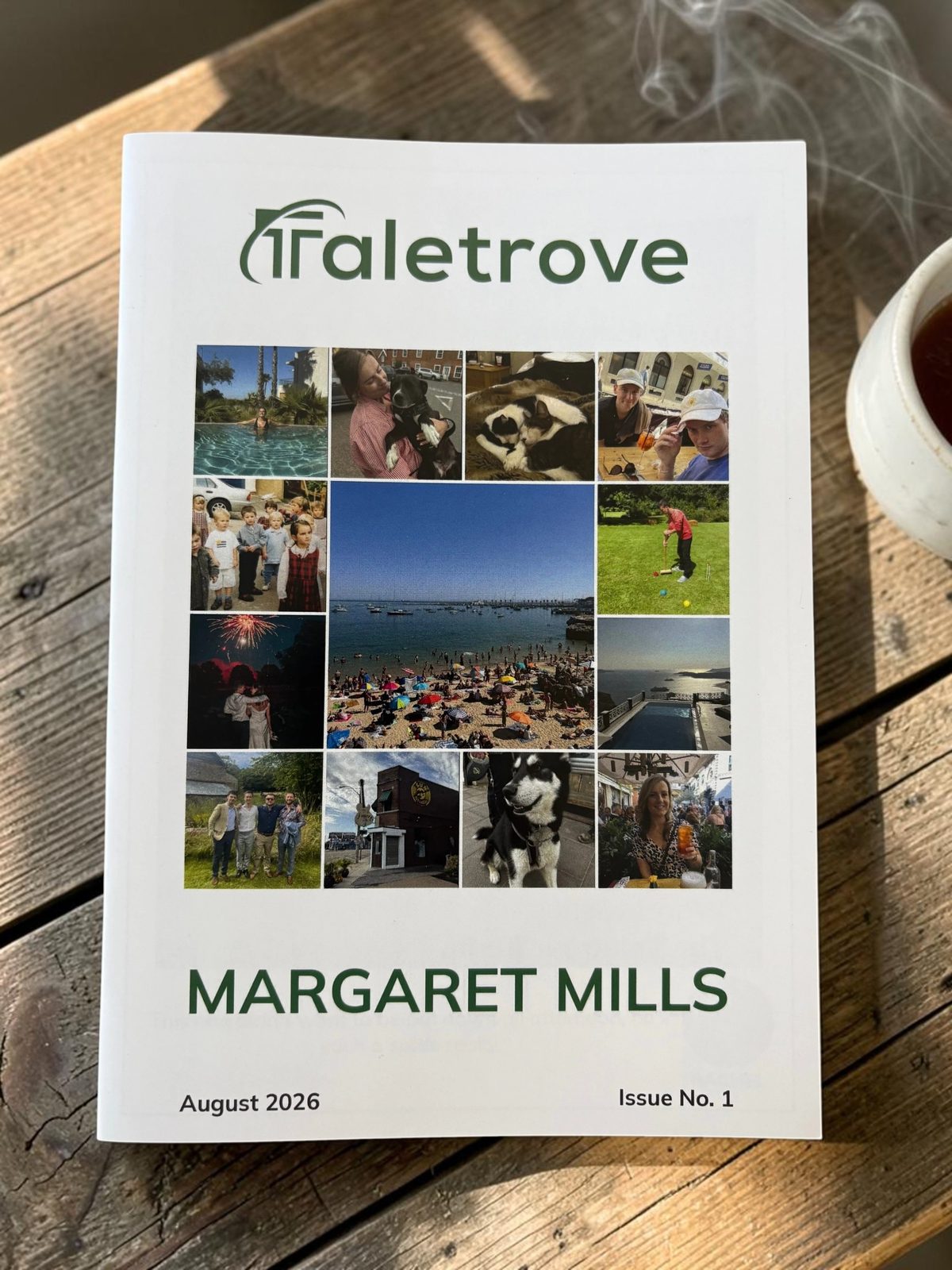
Things to do together
- Jigsaws and games made for adults. Larger pieces and fewer of them, but grown-up pictures: landscapes, steam trains, the seaside. The dignity of the image matters. Avoid anything that looks like it came from a children's shop.
- Films and television from their era. Familiar faces and familiar stories, and no need to follow a complicated plot to enjoy it.
- Large-print books and picture books on their interests. Gardening, birds, football, the county they grew up in. Something to leaf through with a visitor.
- A day-and-date clock. A clear display showing the day, date and whether it is morning or evening. Genuinely useful, and one of the most frequently recommended items there is.
The gift of turning up
- A standing arrangement rather than a one-off. A visit every Tuesday, a phone call every Sunday, a walk once a fortnight. Written on a card and given as a present, it is worth more than anything you can buy, and it is free.
- Something that arrives regularly by post. Flowers, a magazine on their hobby, a small hamper. Post is an event. Something turning up with their name on it is a good moment in the day, repeated all year.
What we do, honestly
- A monthly printed family newsletter. This is our own product, so treat it accordingly. Taletrove takes the photos and messages the family sends on WhatsApp and turns them into a printed booklet, posted out each month. There is nothing for the recipient to set up, no app, no wifi and no password. It sits in the same category as the photograph ideas above: printed, large, familiar faces, something to hold and to show a visitor, and something that arrives again next month. You can see a real sample here if you want to judge whether it fits.
Practical notes worth two minutes
- If they are in a care home, ring first. Space is tight, some items are not allowed, and anything staying in the room should have their name on it. Homes are used to this question and will tell you gladly.
- One present, unwrapped slowly, beats a pile. A stack of parcels can be a lot to take in at once. Spreading them across the day, or across the week, usually makes for a happier Christmas.
- Familiar beats novel. If you are choosing between the thing they have always liked and an improved version of it, buy the one they have always liked.
- Buy for the person, not the diagnosis. A lifelong gardener still wants something to do with the garden. Their interests did not go anywhere.
And for whoever is doing the caring
If you are buying for a family where someone is caring day to day, buy them something too. It is routinely forgotten, and it should not be. A meal delivered, an afternoon covered, or simply being asked what would help.
The short version
Aim at enjoyment rather than at being remembered. Choose familiar over new, simple over clever, and things that engage the senses. Photographs, music, comfort and your own time are the four that almost never miss.
If you would like more on keeping in touch day to day rather than at Christmas, we wrote about that here: How to Stay Connected With a Loved One Living With Dementia.