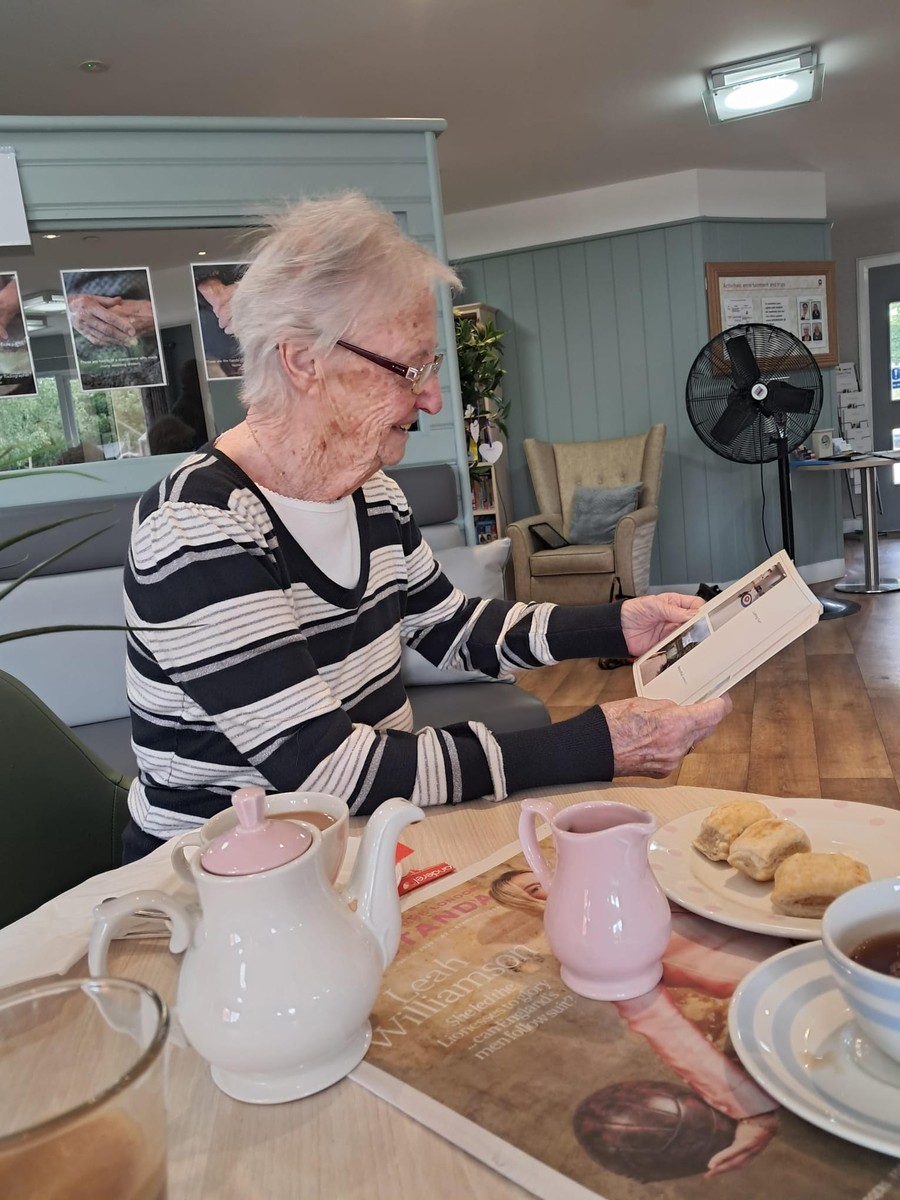
Buying for someone in a care home comes with a set of rules nobody hands you. There is less space than you think, there are things the home would rather you did not bring, and there is the quiet worry that whatever you choose will end up in a cupboard or go missing in the laundry.
The good news is that the constraints are helpful. Once you accept that the room is small and that anything soft will be washed at high temperature, you stop browsing and start thinking about what will genuinely get used. That usually produces a better present than a bigger budget would.
Here is what tends to work, what to check before you order, and the one piece of admin that saves more presents than anything else.
Start with the room, not the shop
Most care home rooms have a bed, a chair, a wardrobe, a chest of drawers and a windowsill. That is the whole storage situation. The best presents either earn their place or take up no room at all.
- Something that hangs on the wall. Wall space is the only space nobody is competing for. A framed family photograph, a calendar with the grandchildren on it, a small piece of art connected to somewhere they lived. Ask the home how they prefer things to be fixed up, because many will do it for you.
- One good photograph for the bedside. Not an album, which stays shut in a drawer. One picture, at eye level from the chair, is seen every single day and gives every visitor something to talk about.
- Anything consumable. Nice toiletries, favourite biscuits, good coffee. It gets enjoyed and then it is gone, which in a small room is a feature rather than a shame.
- An experience rather than an object. Paying for the hairdresser who visits, the chiropodist, a subscription to the newspaper they have always read. Homes usually know exactly how to arrange these, and they cost the recipient nothing to store.
Comfort and the things worn every day
- Easy-care clothing. Anything going into a care home wardrobe will be washed industrially, often and hot. Buy for that: machine washable, no dry clean, no delicate wool, nothing that needs ironing to look right.
- Front-fastening tops and cardigans. Easier to put on, easier for anyone helping, and warmer to sit in than a jumper that has to go over the head.
- Good slippers with a proper sole. One of the most-used presents there is. A back to the heel and a grippy sole are worth more than anything decorative.
- A blanket or lap wrap. Rooms are warm but chairs are not, and something across the knees gets constant use. Again, check it survives a hot wash.
- The toiletries they have always bought. The familiar talc, soap or aftershave beats the smartest new thing on the counter, every time.
Things to do, and things to look at
- Large print books, or the same book they already love in a bigger edition. Ask the home whether there is a library trolley first, because you may be duplicating something free.
- An audiobook player or a simple radio. Buttons and dials rather than a touchscreen. Something that works the moment it is switched on gets used, and anything needing an account usually does not.
- Puzzles, crosswords and card games. Pick by interest and eyesight rather than by age. A puzzle about steam trains or the coast they grew up on beats a generic one.
- A bird feeder for outside the window. If the room looks onto anything green, this is a present that keeps giving all winter and takes up no room inside.
- A letter, or the grandchildren's drawings. Free, and consistently among the most kept things on this list. Post is an event in a care home.
See it for yourself
What actually arrives through the door
A real printed edition, the same booklet we post to families every month.
Read a sample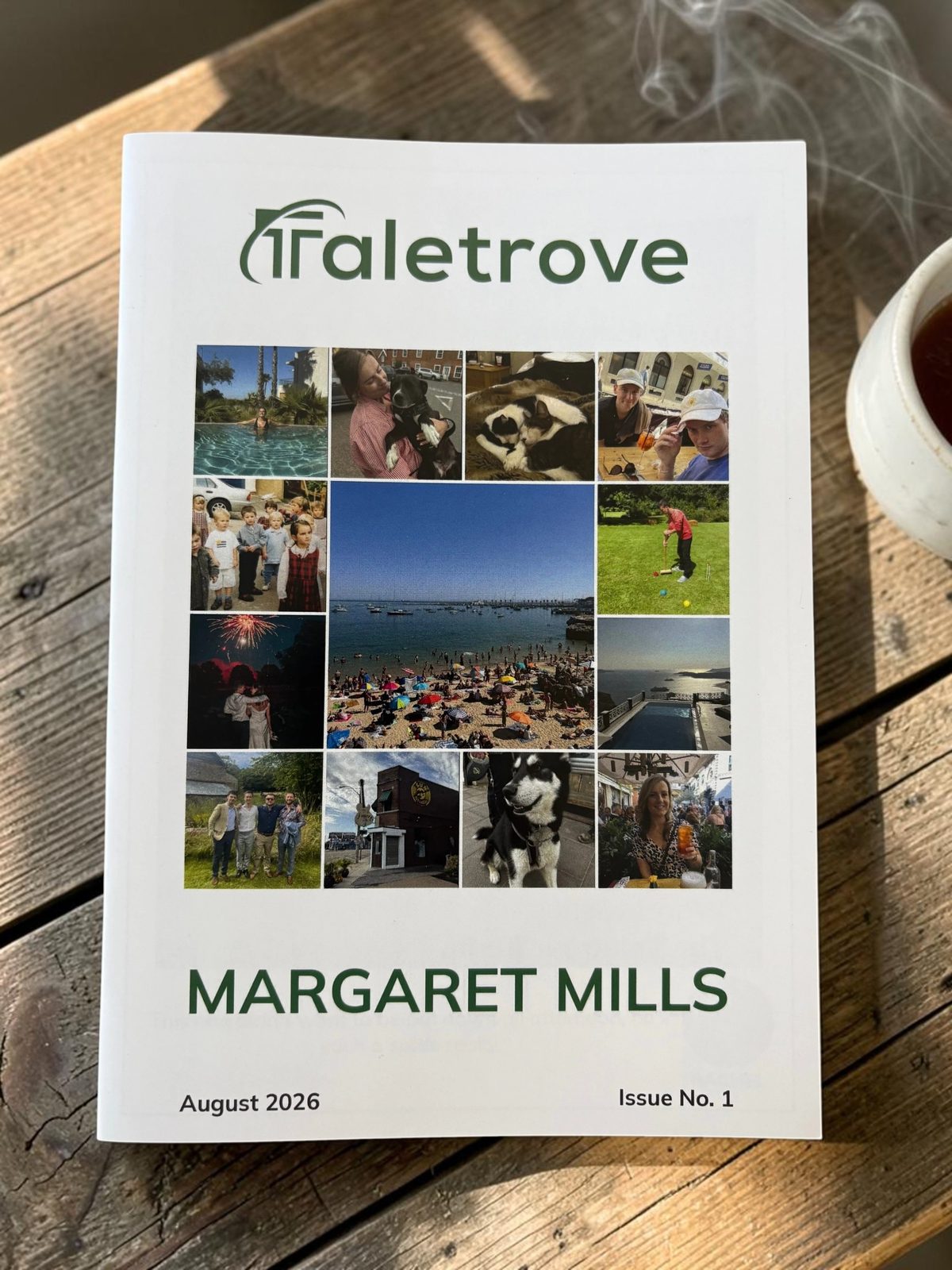
What to check with the home before you order
Two minutes on the phone saves a wasted present, and staff are used to the question. Policies vary between homes, so ask rather than assume.
- Anything with a flame. Candles, tea lights and oil burners are usually not allowed. Battery candles are the standard substitute and most homes are happy with them.
- Electrical items. Many homes ask that anything brought in is safety-checked before it is plugged in. It is rarely a problem, it just needs arranging, so tell the home it is coming.
- Food, drink and sweets. Worth checking against dietary needs, diabetes, and any difficulty with swallowing. The home will tell you plainly and will usually suggest something that works instead.
- Alcohol. Often fine in moderation, sometimes stored and served by staff, occasionally not permitted at all. Ask before wrapping the whisky.
- Plants and cut flowers. Some homes limit these, and someone has to water a plant and find a vase for flowers. A low-maintenance plant is kinder than a bouquet that becomes a job.
- Jewellery and anything valuable. Rooms are shared spaces in practice, with a lot of people coming and going. Sentimental value and replaceable are a much better combination than expensive.
Label everything, and label it properly
This is the single most useful thing on the page. Clothes, blankets, slippers and towels all go through a shared laundry, and unlabelled items go missing. It is not carelessness, it is volume.
Sew-in or iron-on name labels are the reliable option, and a laundry marker on the care label works well enough. Do it before you wrap, not after, because once it is in the wardrobe it rarely gets done. Homes will often tell you which method they prefer.
If they have only just moved in
The first weeks in a care home are mostly about the room feeling like theirs rather than like a room. Presents that help with that do more than presents that entertain.
A familiar bedspread or cushion, photographs already framed and ready to go up, their own clock, a favourite mug. Nothing on that list is exciting to buy, and all of it does real work. Ask about a noticeboard or a memory box by the door, because many homes have them and they are a good home for photographs and a few small things that say who this person is.
The thing that is hardest to buy
Most families arrive at the same conclusion eventually. The present they would actually choose is more contact with everyone, and that is the one thing that will not fit in a box.
Some of it you can arrange. A regular visiting rota shared between the family is worth more than anything on this page. So is post, arriving on ordinary days rather than only at Christmas, because a card in November lands harder than a card in a pile of twenty.
The one we make
We should be upfront that we sell something in this space. Taletrove is a monthly printed family newsletter. The family shares photos and messages in a WhatsApp group, the app you are already using, and each month those become a printed booklet posted to the home. There is nothing to plug in, no account, no wifi and no password, which is why it suits care homes: it takes up no space, it does not need charging, and it does not need permission from anyone.
It is also easy to share, which matters more than we expected. Residents show it to staff and to the people they sit with, and the staff get to know the family by name.
It suits some families and not others, and everything above this paragraph is a list of alternatives we do not sell. If you want to judge it yourself, read a real sample or start one in a few minutes, with the first month half price.
If you are buying for Christmas
Order earlier than feels necessary. Royal Mail's December deadlines come round sooner than anyone expects, and anything printed or personalised needs longer again. If a present has to be made before it can be posted, order it in November. It is also worth asking the home when they would like presents to arrive, because most would rather not store twenty parcels for a fortnight.
The short version
Buy for the room, not the shop. Check flames, electricals, food and alcohol with the home first. Assume everything soft will be washed hot, and put a name in it before you wrap it. And remember that the presents most likely to be kept are the ones with the family in them.